From Common Concerns to Complex Conditions — We’ve got you Covered.

Explore how we assess, treat, and support your feet—from biomechanics and orthotics to nail care and diabetic monitoring. Every section below uses the same clear, modern layout that respects light and dark mode across the site.
Services at a glance
4D Foot Analysis
Objective 4D Foot Analysis and pressure insight to guide footwear, training, and orthotic decisions.
Custom Orthotics
Insoles and devices shaped to your feet, shoes, and activity level.
Flat Foot Treatment
Support for low arches and over-pronation to reduce pain up the chain.
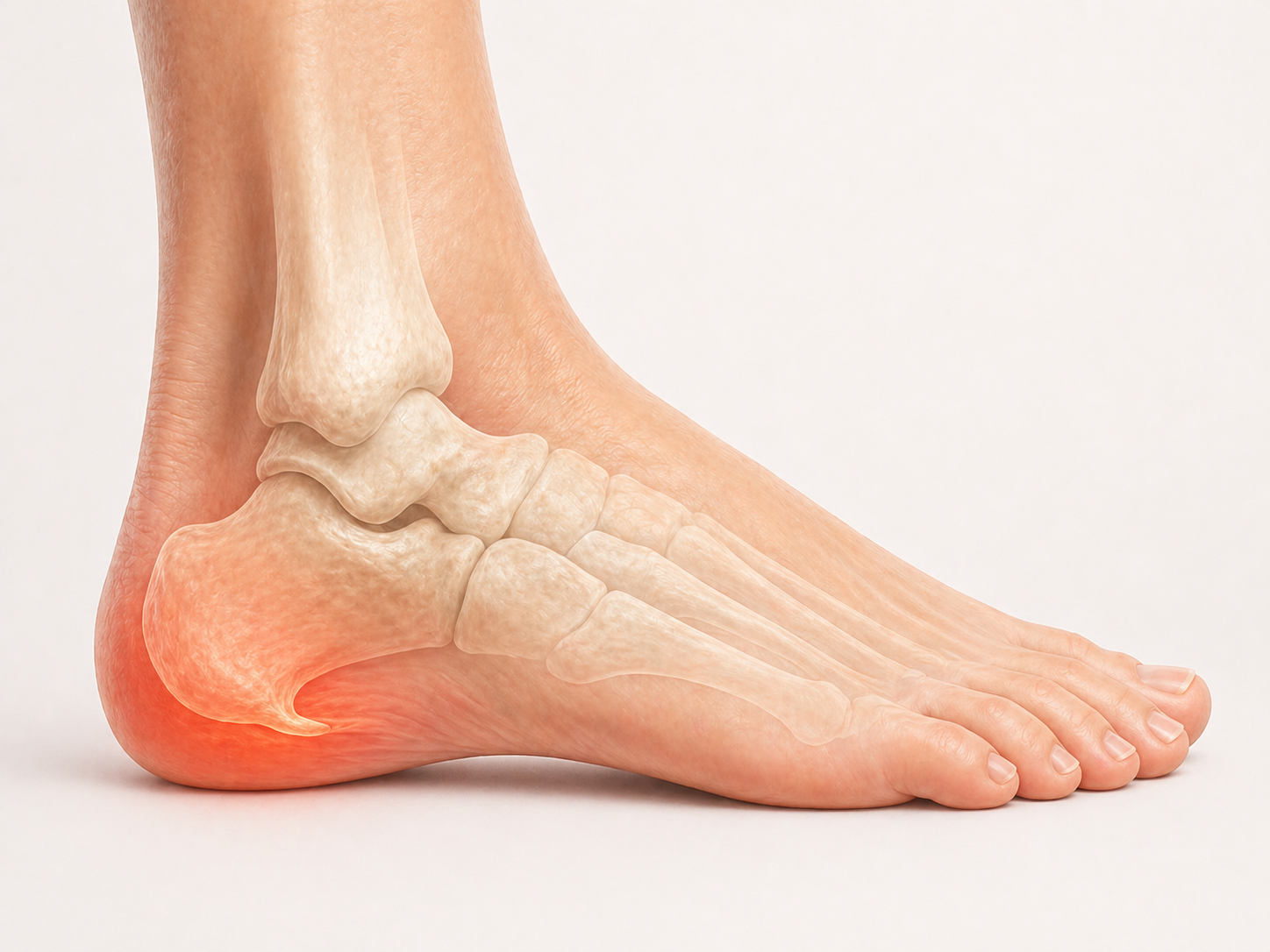
Heel & Arch Pain Relief
Relief for plantar fascia irritation, heel spurs, and arch overload.
Pediatric Foot Issues
Gentle, age-appropriate care for growing feet and walking milestones.
Diabetic Foot Monitoring
Routine checks and education to protect sensation, skin, and circulation.
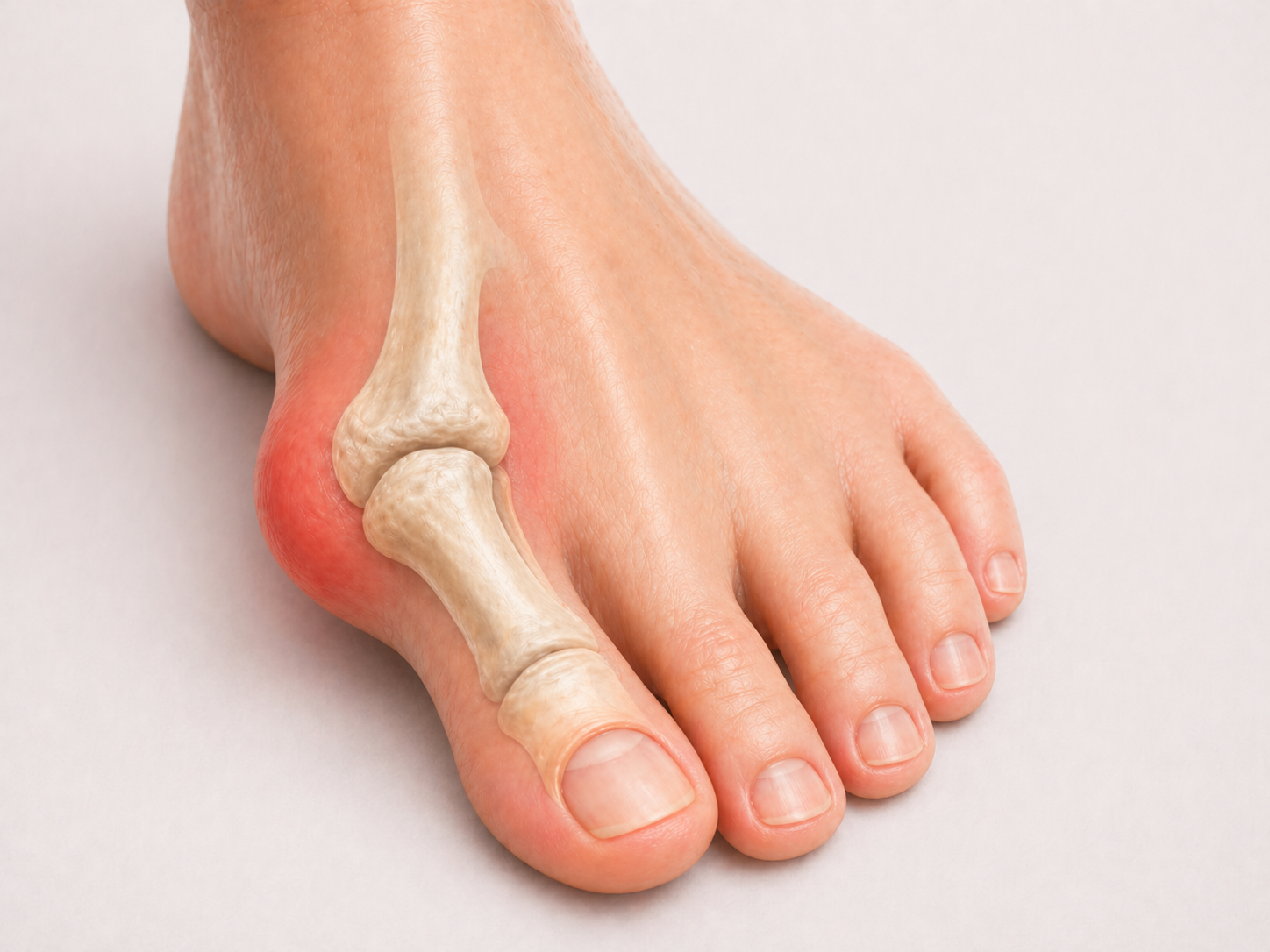
Bunions — assessment and treatment
A bunion is a structural issue at the base of the big toe: the toe drifts toward the smaller toes and a prominence often forms at the joint. Genetics and foot mechanics play a big role, and tight or pointed shoes can make symptoms worse.
Bunions typically do not shrink on their own—the underlying alignment remains. Pads and wider shoes can ease pressure; splints may calm irritation for some people but do not reverse the deformity.
We review your footwear, activity, and goals, then recommend padding, orthotics, exercises, or referral for surgical discussion when conservative care is not enough. Our aim is comfortable walking and confidence in your shoes again.
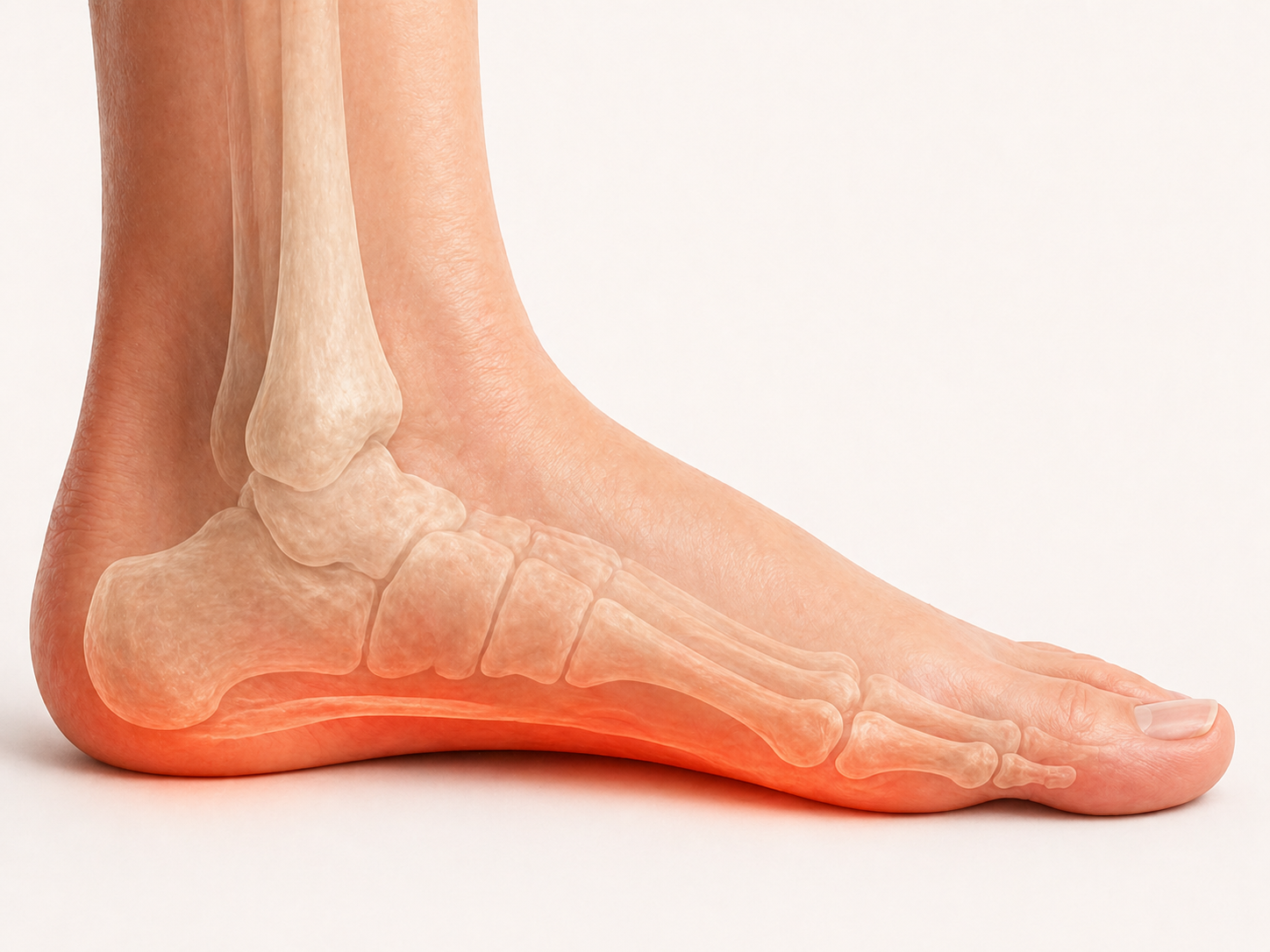
Flat feet and over-pronation
Flat feet often involve naturally low arches and feet that roll inward (over-pronation). Over time this can contribute to heel pain, tired arches, shin discomfort, and even stress on knees and hips.
You do not always need aggressive treatment—many people simply need better support and movement habits. We look at how you stand, walk, and train.
Custom orthotics, footwear guidance, stretching, and strength work are common parts of a plan. We focus on reducing overload and keeping you active with realistic steps.
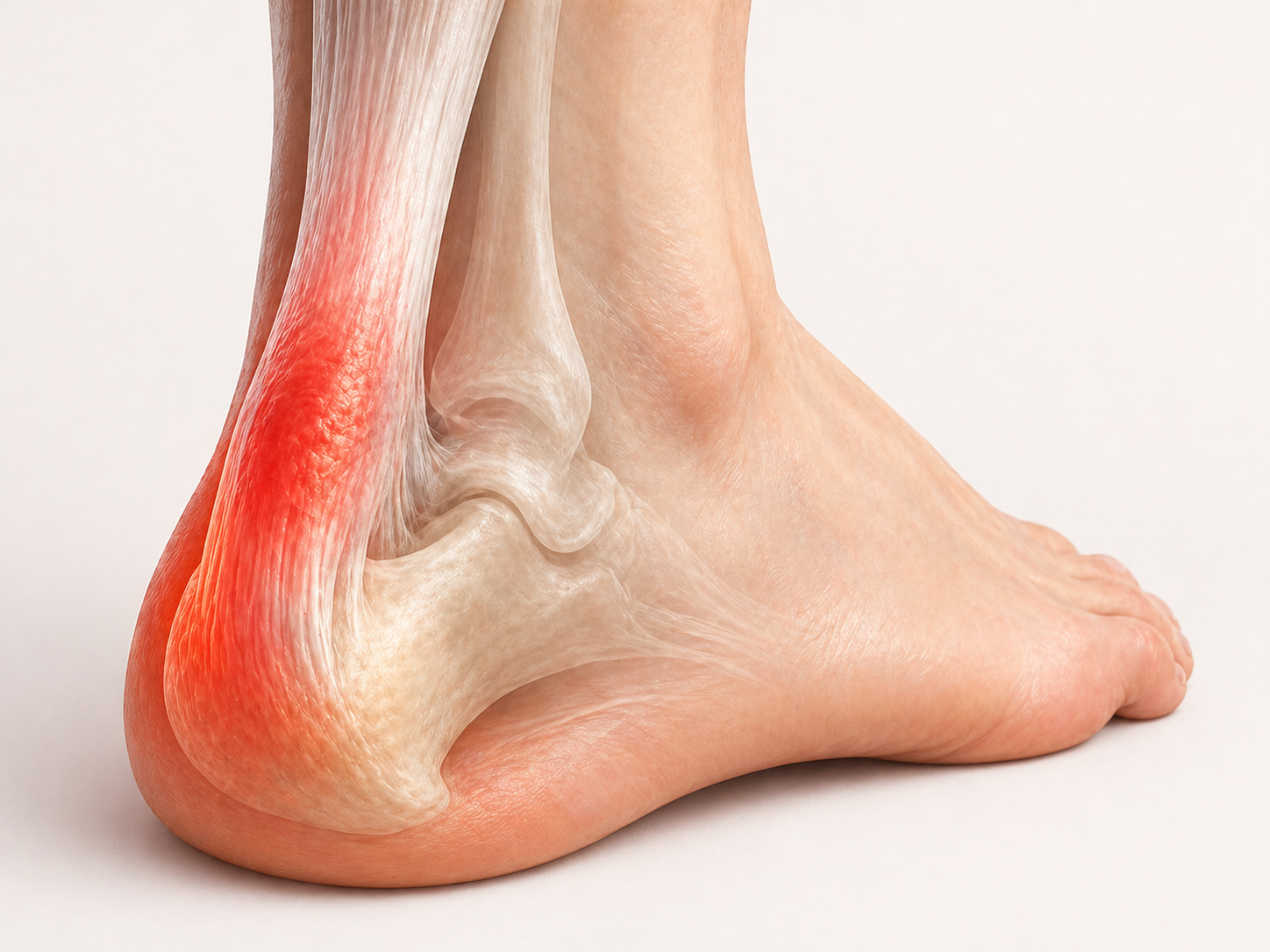
Achilles tendinopathy
Pain at the back of the heel or lower calf may be related to load on the Achilles tendon—for example after a spike in walking, running, or sport.
Symptoms often include stiffness with the first steps in the morning or after rest, and aching after activity. Swelling or thickening can occur along the tendon.
We balance activity modification, targeted rehab, footwear, and sometimes orthotics so the tendon can tolerate load again. Early care usually means a faster return to what you enjoy.
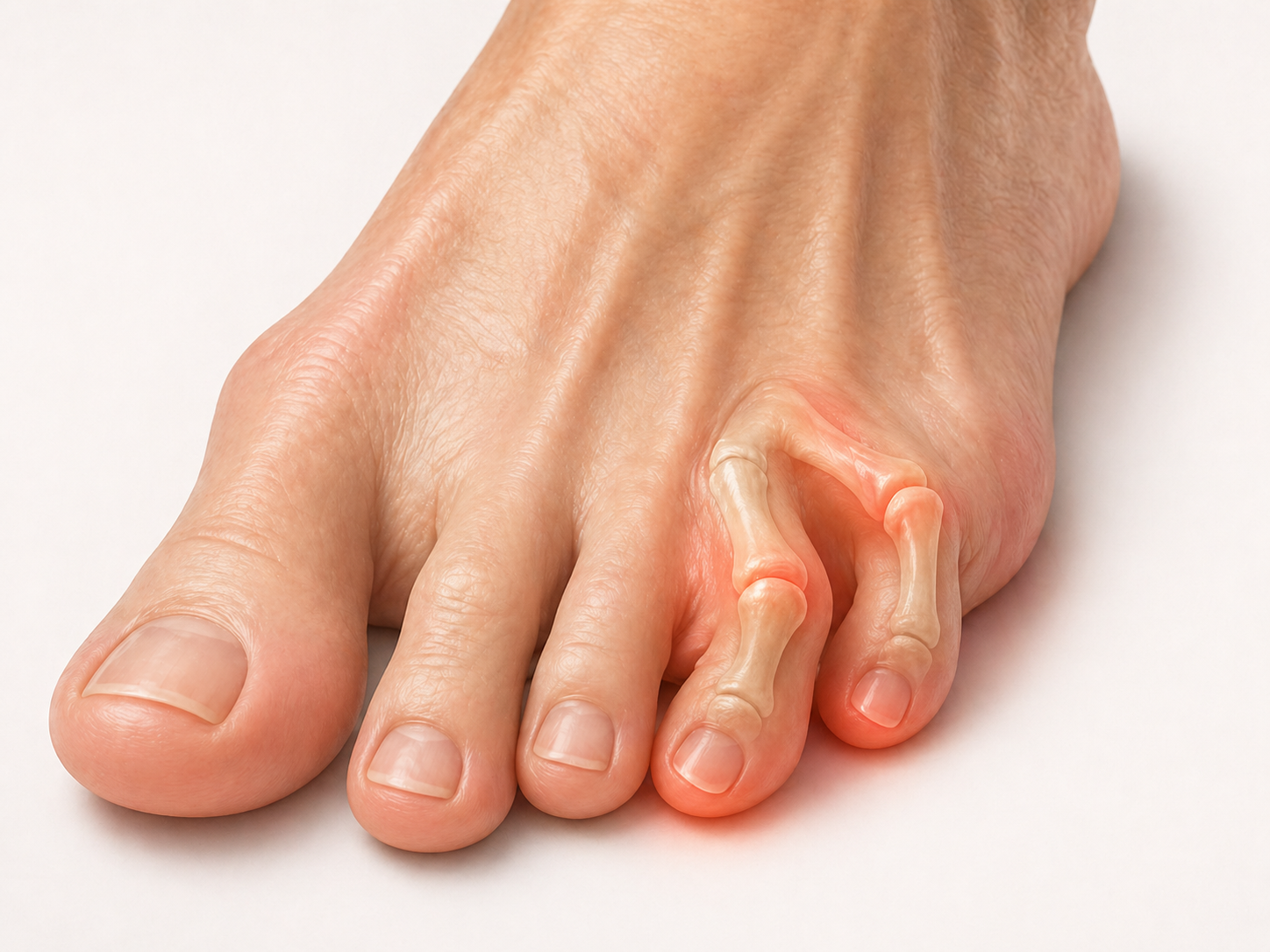
Hammer toes and toe deformities
Hammer toes curl or buckle so the knuckles rub inside shoes, leading to corns, calluses, and embarrassment in open footwear.
Many people live with flexible deformities for years. Non-surgical care can still improve comfort: professional reduction of corns and calluses, better shoe shape, toe strapping, orthotics, or padding.
We explain when conservative care is enough and when surgery might be discussed, so you can choose with confidence.
Heel pain, spurs, and plantar fascia care
Heel pain is often linked to irritation of the plantar fascia or nearby structures; bone spurs may appear on imaging but are not always the sole source of pain.
Inflammation and tissue stress build with standing work, poor footwear, tight calves, or sudden increases in activity.
We combine footwear advice, stretching, taping or night splints when helpful, orthotics, and a staged loading plan. The sooner we address symptoms, the better the chance of avoiding chronic heel pain.